Here is one quintessential Catalan dessert: Crema Catalana, a refreshing citrus-infused cream, with a touch of cinnamon and vanilla, covered with a crunchy layer of burnt sugar.
But my curiosity for Crema Catalana transcends taste; I also want to know more about its history.
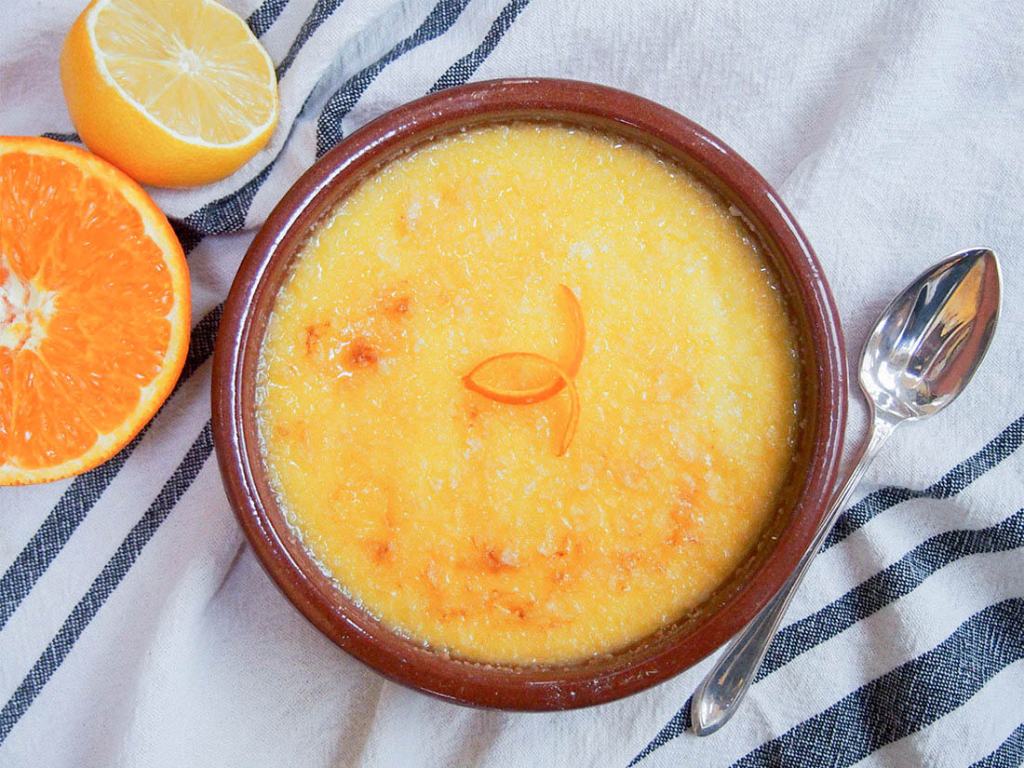
Crema Catalana originated in the 17th century when a Bishop visited a convent in Catalonia, part of Spain today. When the nuns prepared a flan for him, the result was, unfortunately, a liquid cream. In an attempt to fix it, they added a layer of caramelized sugar just before serving it. Subsequently, the bishop who took a bite shouted: Crema! (it burns! In the Catalan language).
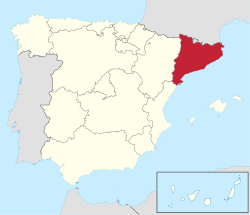
Dutton noted that food has myths for various reasons, such as exotic origins, expensiveness or symbolic meanings. For example, medieval banquet must be exquisite, for food at that time was symbolically associated with divine attributes. I interpreted the fetishism around crema catalana for being eaten once in a while: served on a special occasion. It was traditionally only served during St Joseph’s day.
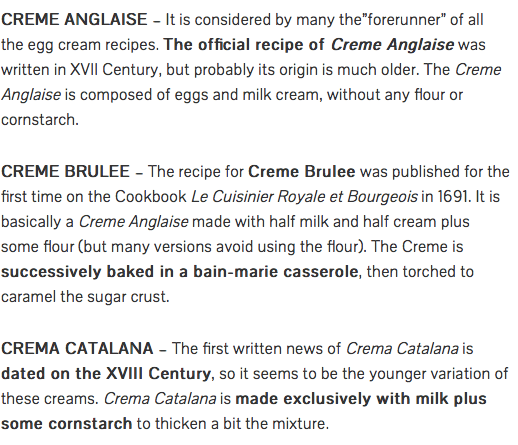
Yet crema catalana was also influenced by desserts such as Creme Brulee and Creme Anglais, from France and England respectively. Food never exist in a vacuum: recipes developed through processes such as trade and columbian exchange
But to the dismay of Catalans (who prized their authentic cuisine), many people think that all the ‘creme’ were the same things….
If you ever plan to visit Catalan, please note such differences before booking your flights.
 Annette's Taste of Europe