I want order and taste. A well displayed meal is enhanced one hundred per cent in my eyes.
– Marie Antoine Careme
Hi! My name is Annette.
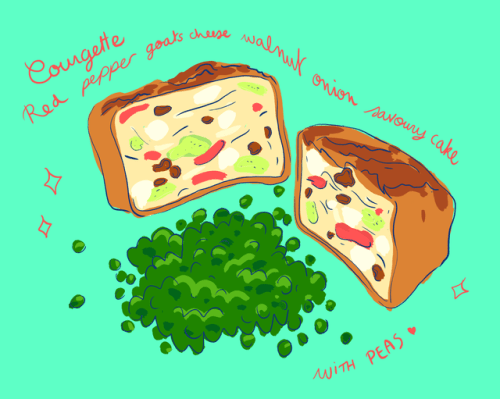
Illustration from Tumblr
I am an Indonesian girl, born in Brisbane and currently living/studying in Melbourne. This site is a journal of culinary exploration of European cuisine. It was the combination of my personal curiosity and passion for food studies that lead me here. Why European cuisine? well, it is something different and novel than what I am accustomed to eating, and I simply enjoy trying new things.
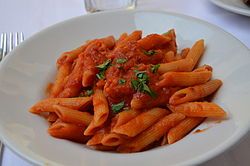
‘Arrabiata’ in Italian translates to angry. In Penne All’arrabiata, it refers to the fiery kick of the pasta’s chilli-spiked tomato sauce. Growing up with spicy food made me interested in learning and cooking penne all’arrabiata. The recipe was also easy for beginners like me.
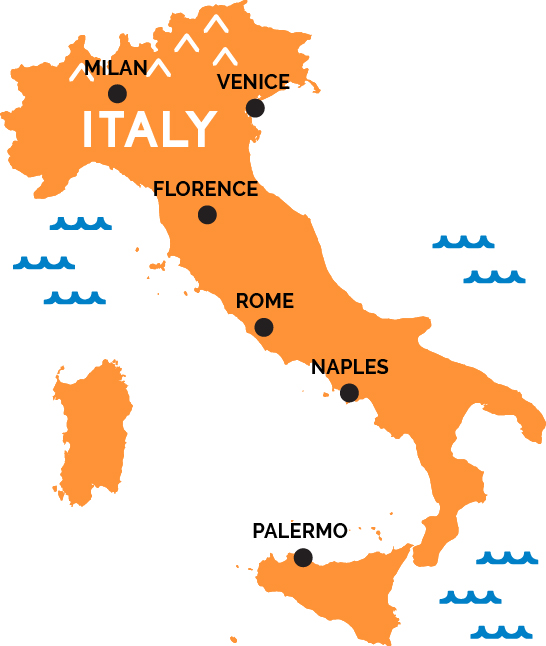
A lot about this dish is unknown, but it was said to have originated from Rome. The dish consists of penne, tomatoes, olive oil, garlic and red chilli peppers. However, there were many variations of this recipe. I think the fact that a lot of Italians became migrants made them more flexible in their recipe. The scarcity of ingredients for Italian cooking in a foreign land made them utilize whatever they have on hand.
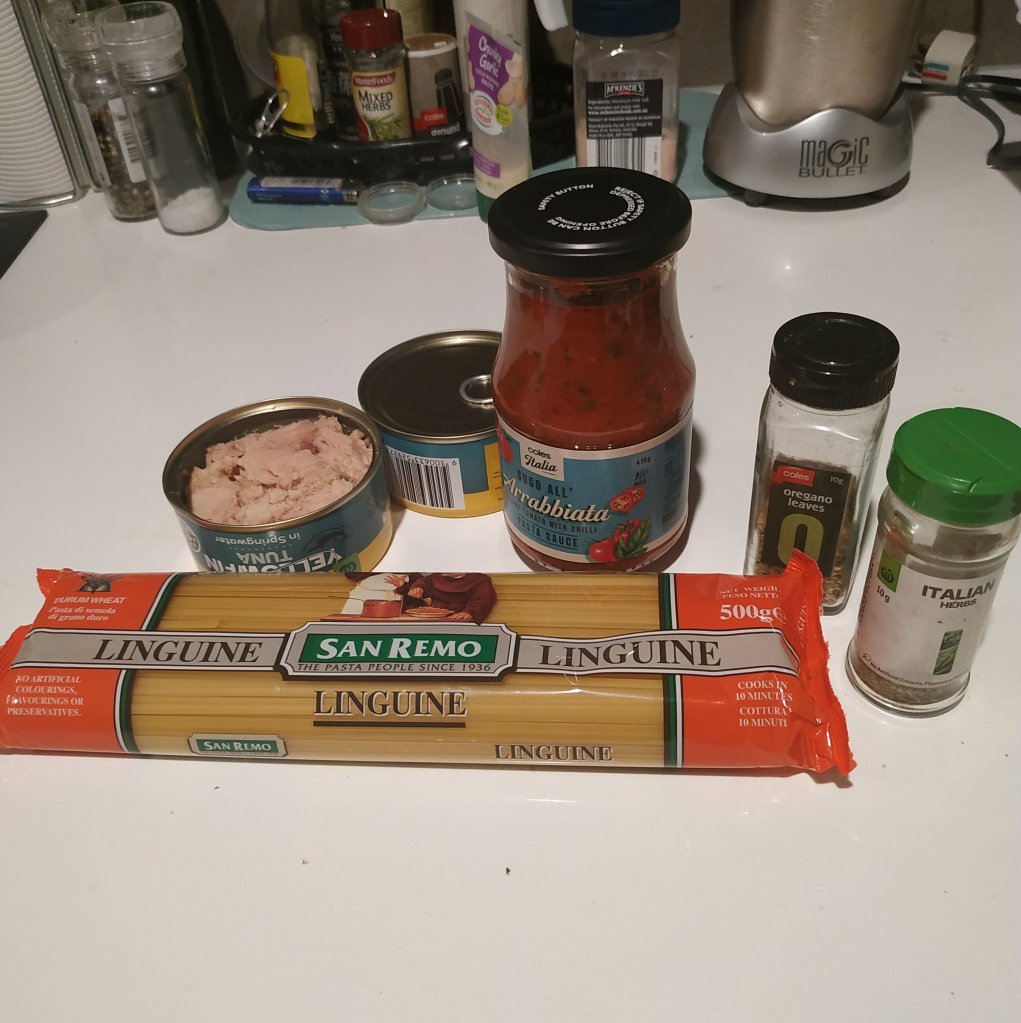
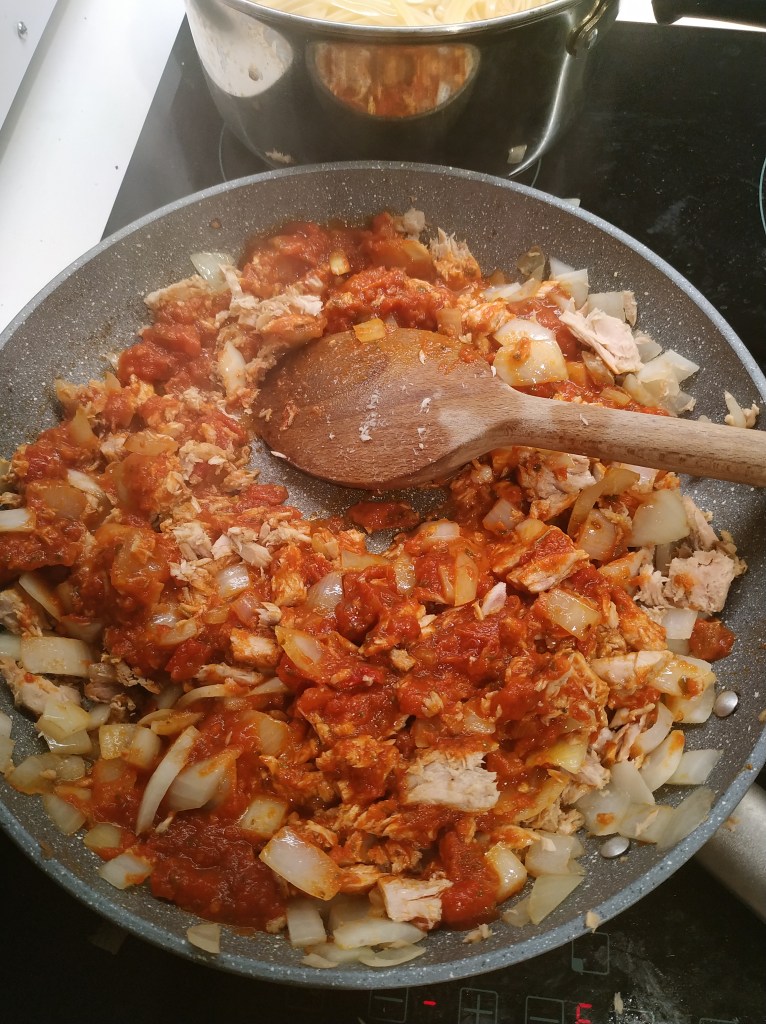
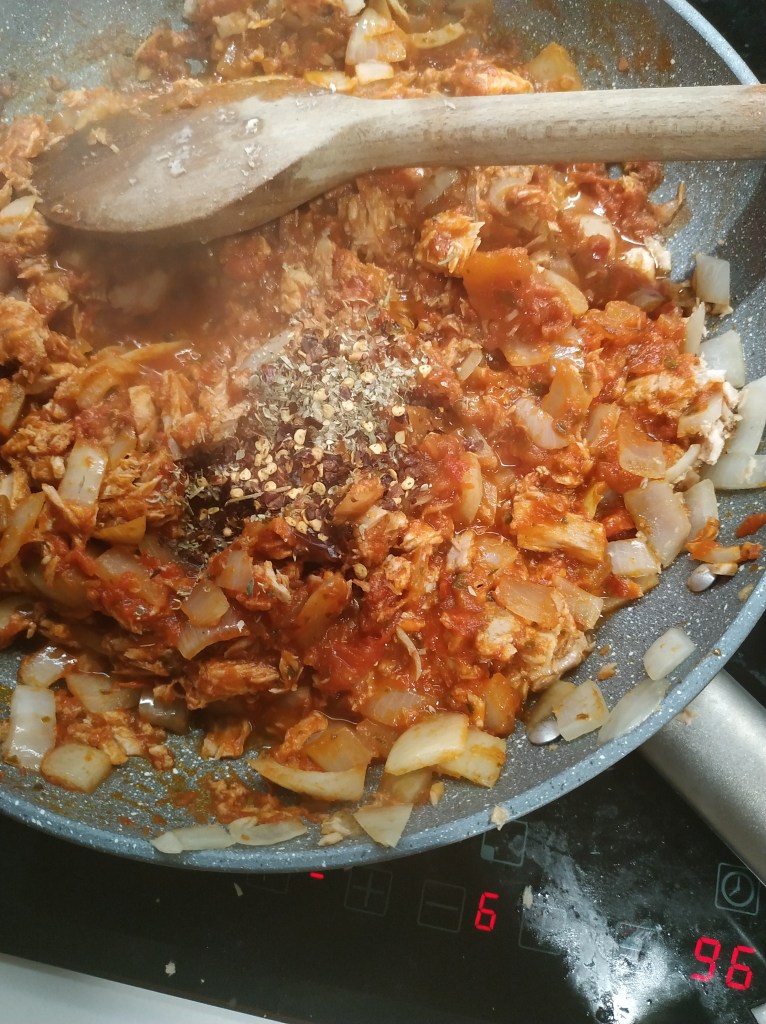
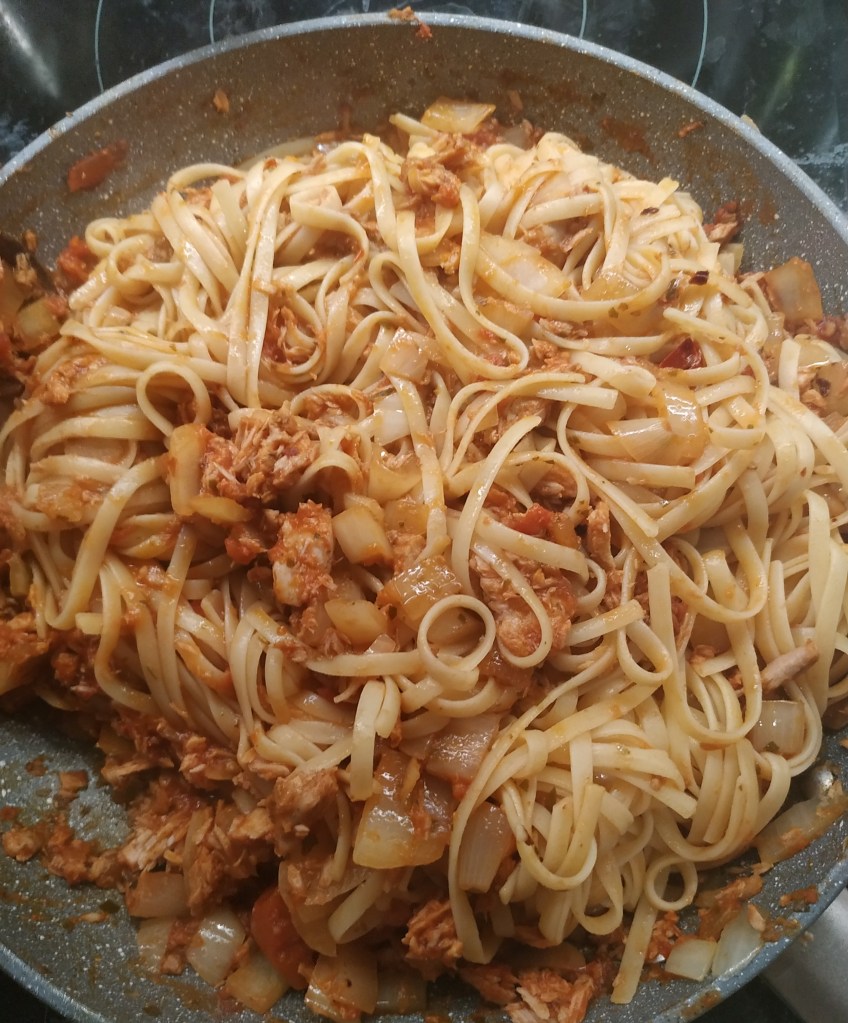
From left to Right: the process in making Arrabiata (Source: Annette Syahlani, 2020)
And so I tweak this recipe to be palatable to my liking. I like my pasta with protein or vegetables, so I added canned tuna to the pasta. Hence, a dish that was traditionally an entree becomes filling as a main course. I also added more red chili flakes and dried oregano for an extra punch of flavour.
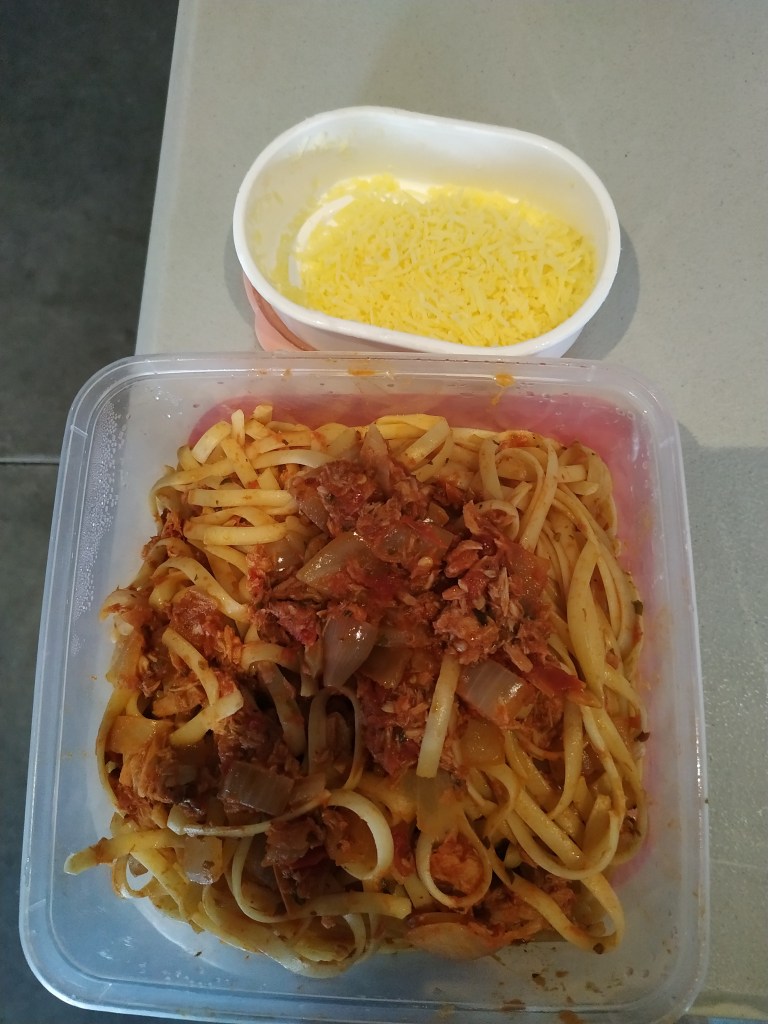
Tuna Arrabiata: Finale (Source: Annette Syahlani, 2020)
As I brought it to the food fair, I plated it on a red container, to match the theme, with parmesan on the side. It was simpler than the dishes that other students brought, but some people enjoyed it. Ultimately, pasta, whatever the type, is comfort food that can never go wrong.
Overall, I feel okay about my cooking. I think it was good enough for beginners like me. But next time, I might challenge myself even further by trying out more advanced recipes. Maybe one day I can make desserts like croquembouche. Who knows?
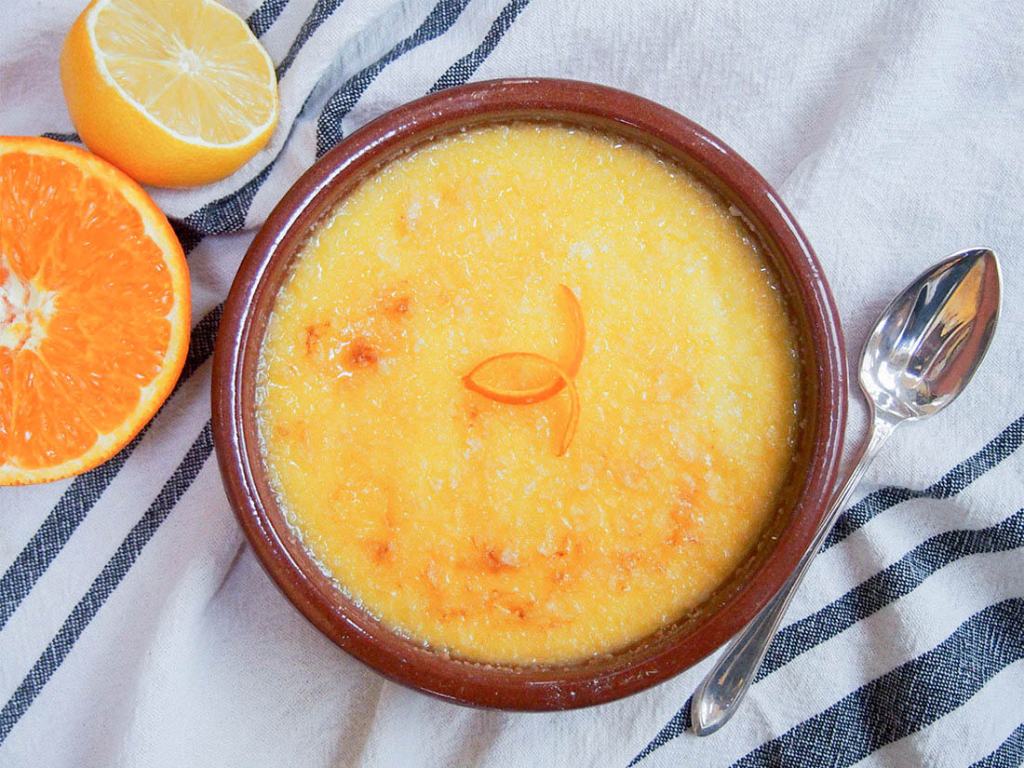
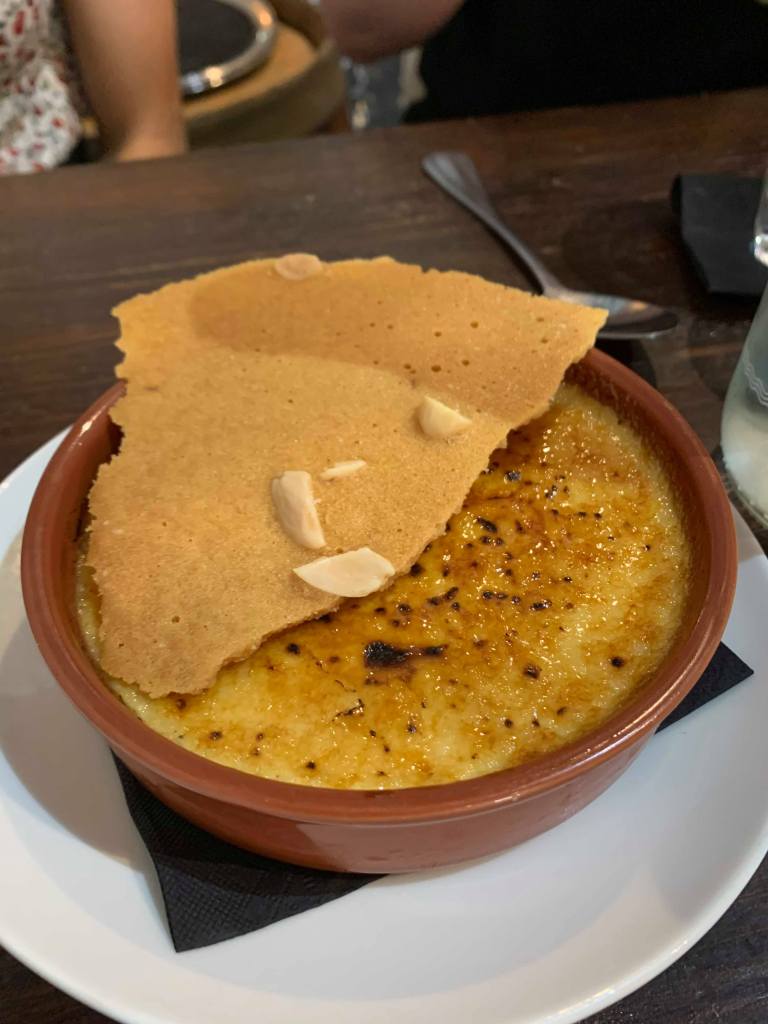
Here is one quintessential Catalan dessert: Crema Catalana, a refreshing citrus-infused cream, with a touch of cinnamon and vanilla, covered with a crunchy layer of burnt sugar.
But my curiosity for Crema Catalana transcends taste; I also want to know more about its history.
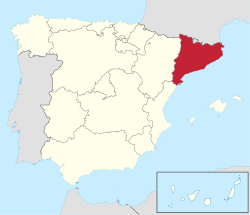
Crema Catalana originated in the 17th century when a Bishop visited a convent in Catalonia, part of Spain today. When the nuns prepared a flan for him, the result was, unfortunately, a liquid cream. In an attempt to fix it, they added a layer of caramelized sugar just before serving it. Subsequently, the bishop who took a bite shouted: Crema! (it burns! In the Catalan language).
Dutton noted that food has myths for various reasons, such as exotic origins, expensiveness or symbolic meanings. For example, medieval banquet must be exquisite, for food at that time was symbolically associated with divine attributes. I interpreted the fetishism around crema catalana for being eaten once in a while: served on a special occasion. It was traditionally only served during St Joseph’s day.
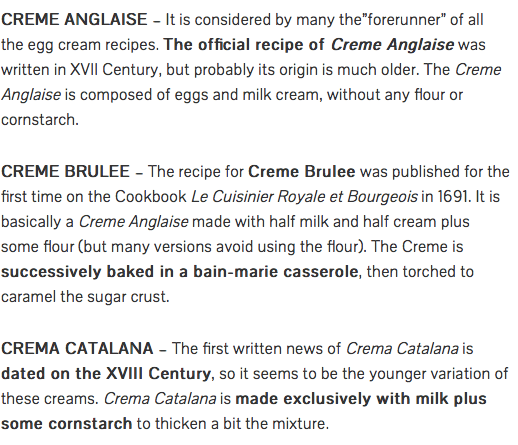
Yet crema catalana was also influenced by desserts such as Creme Brulee and Creme Anglais, from France and England respectively. Food never exist in a vacuum: recipes developed through processes such as trade and columbian exchange
But to the dismay of Catalans (who prized their authentic cuisine), many people think that all the ‘creme’ were the same things….
If you ever plan to visit Catalan, please note such differences before booking your flights.
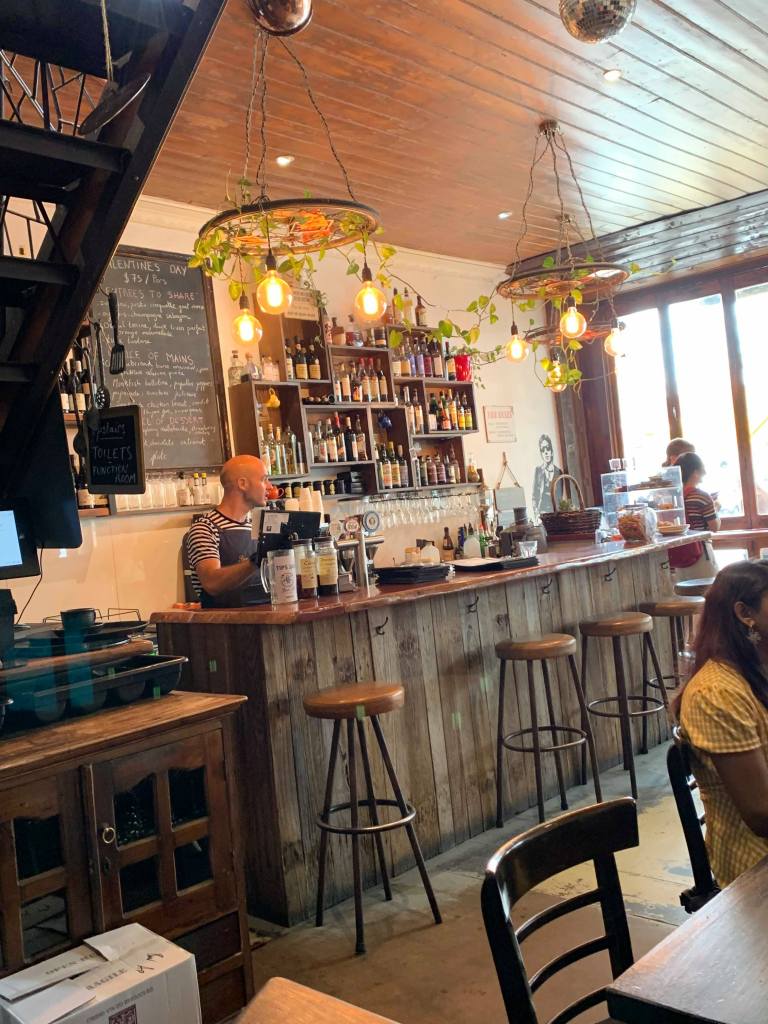
In search of European food in Melbourne, I went on a culinary adventure around Fitzroy’s Brunswick St (south of Johnson st). Famous for their vintage stores and trendy bars, this strip is also known for a plethora of affordable restaurants.
The Foodscape (Source: Annette Syahlani, 2020)
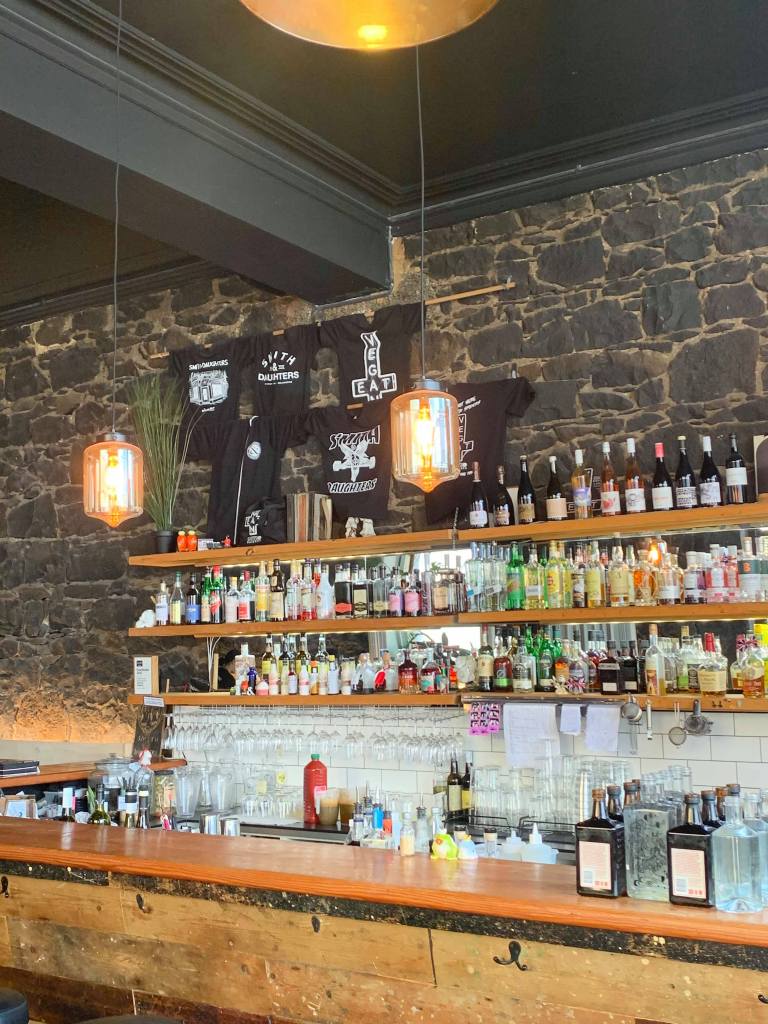
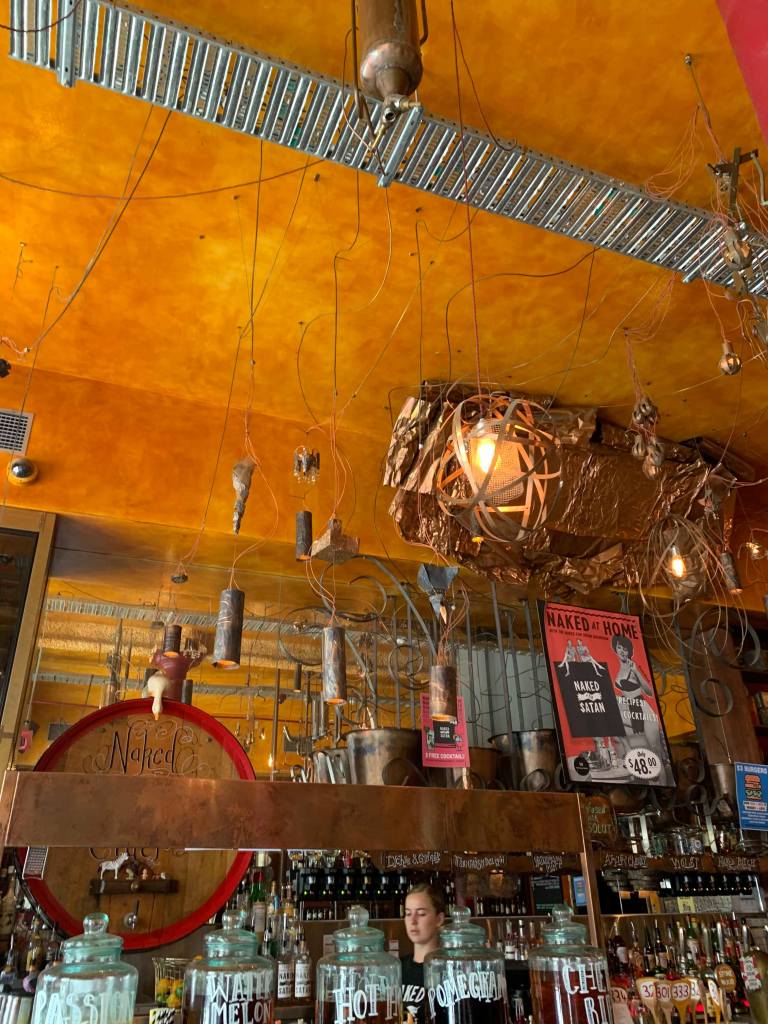
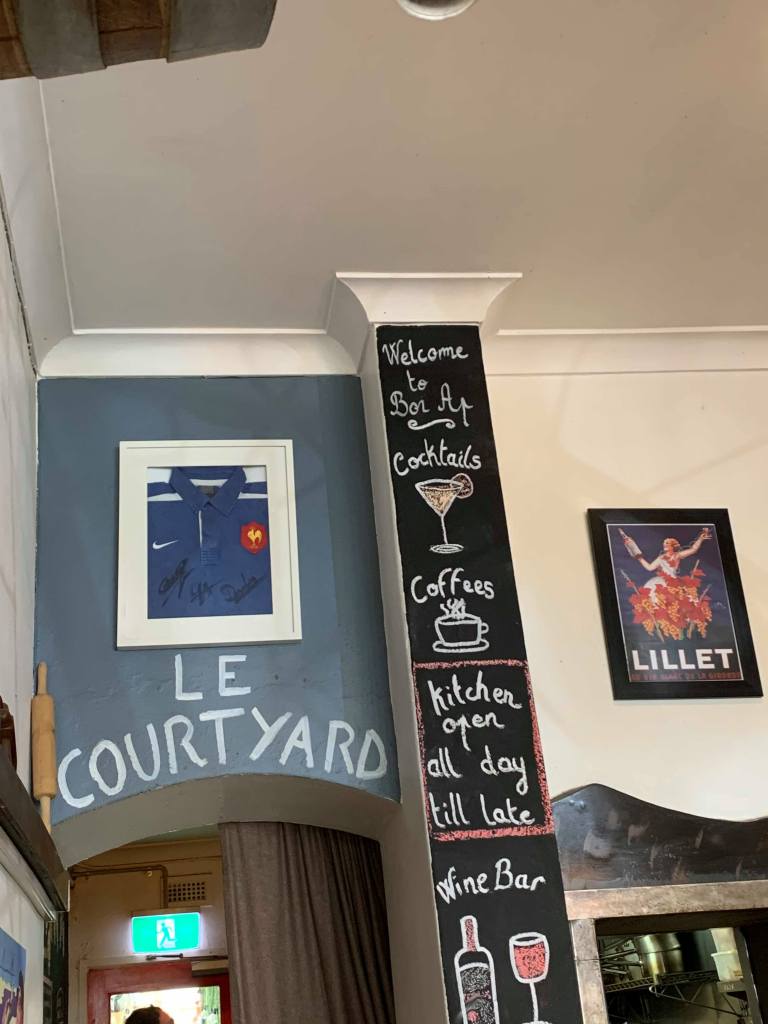
At first glance, this strip seems to only cater to the bohemian youth. People around me had colourful hair and Dr Marten Boots. As I walked past the restaurant Smiths and Daughters, I can sense how the modern decor fits into the trendiness of this street. I peered into the menu plastered in the windows of a bar, to which they had Spanish fusion food. But when I later dined at a french bistro, the place felt like a mini replica of Paris. So here is a street filled with diverse culinary trends, from traditional cuisines to innovative fusion food.
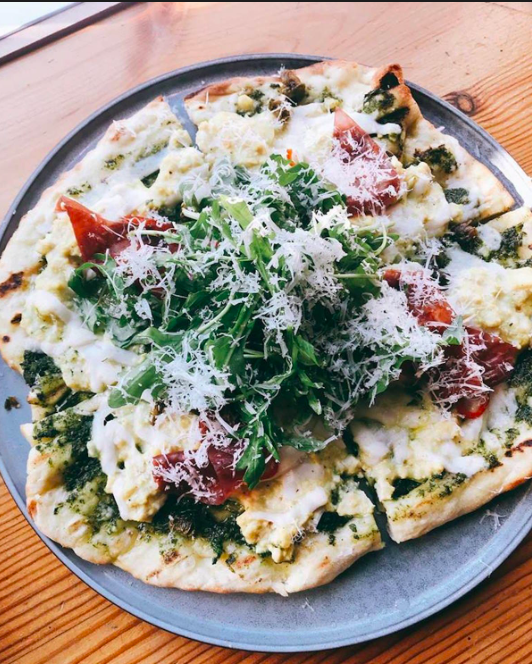
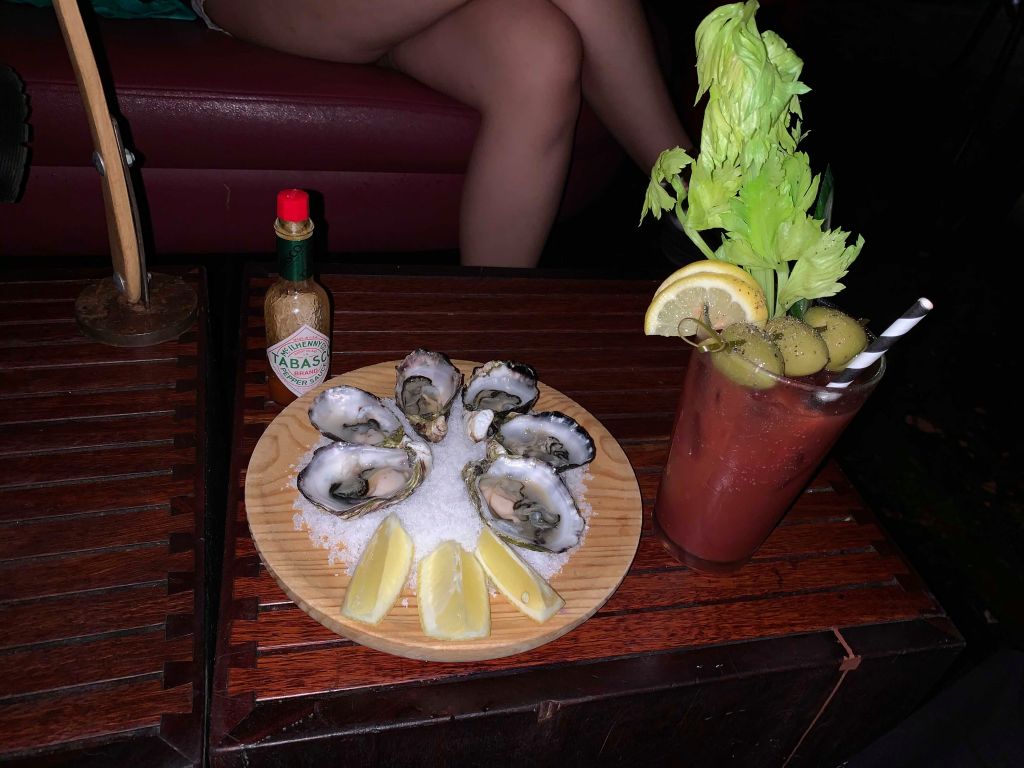
Food and their corresponding restaurants; smiths and daughters (right), naked for satan (centre), bon ap’petit bistro (left). Sources: (personal photography and smiths & daughters’ zomato)
My culinary exploration reflected the importance of migration in shaping Melbourne’s culinary identity. Quintessential ‘authentic’ restaurants exist to reconnect migrants with their now distant homeland, a positive form of nostalgia. Enabled by globalization, restaurants merge different culinary traditions to create a novel dining experience. Such heterogeneity gives me both a sense of belonging and novelty. There is always an excitement in experiencing something new, and comfort in understanding that others came from a different place like I am.
Yet it also made me reflect what migrants had to endure to keep their culinary traditions alive, fighting against the Australianization of their cuisine. Hence, my culinary adventure also provokes me to think about the broader socio-political issues regarding migrants and the border. Of course, food will somehow be a part of those issues.
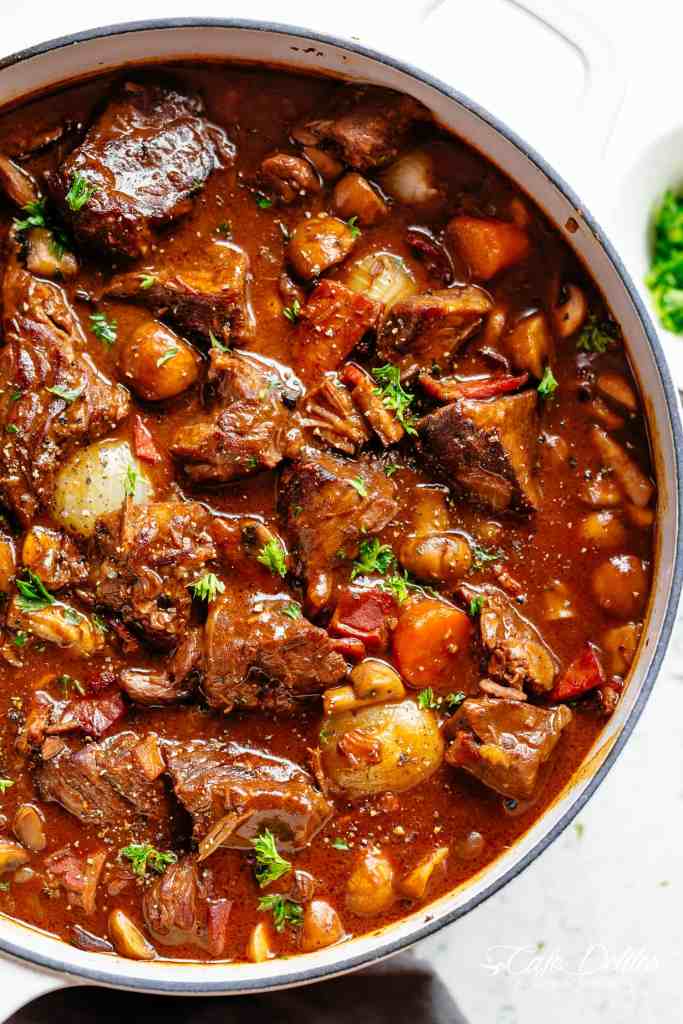
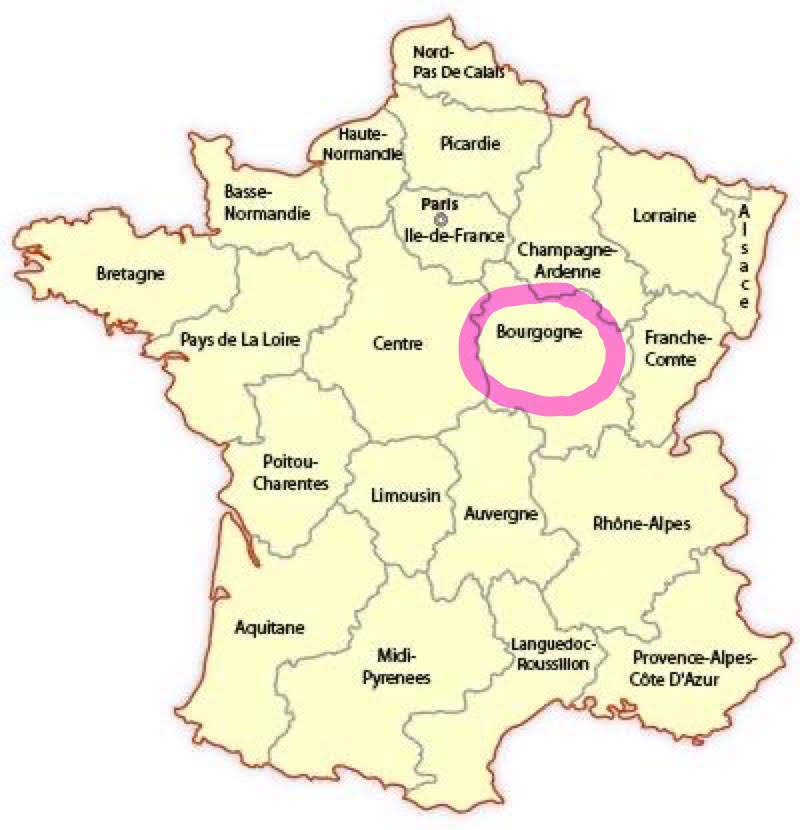
If there is one particular dish that intrigues me from France, it will be Beef Bourguignon. As an Indonesian accustomed to eat stew, the meal would be my go-to if I ever lived in France and missed comfort food.
Hailed from the Burgundy, Beef Bourguignon is a hearty stew made of the region’s best products: red wine and Charolais beef. The Charolais cattle, found around the Charolles region of Southern Burgundy, are reputable for their tender and excellent quality meat. It perfectly complements Burgundy’s rich red wine (especially Pinot Noir or Gamay) when stewed together as Beef Bourguignon. Thus, the dish is reflective of Burgundy’s identity, for it consisted of their prized native ingredients. Yet this dish is also very ‘French’, as characterized by the use of herbs (thyme, parsley and bay leaves) than spices commonly used in their Middle-Eastern/African counterparts. Additionally, the recipe also includes onions, carrots, mushrooms and garlic.
Beef bourguignon has its origins as a peasant’s food, dating as far back as the middle ages. It was invented to slow-cook tough, unwanted meat and other available ingredients to provide sustenance. However, the dish became popular within the French public and restaurants when Auguste Escoffier published a written recipe in 1903. Today, the French overwhelmingly voted for Beef Bourguignon as their top national dish. Thus, it rings true to Pankhurst’s idea that cookbooks are integral in the nationalization of cuisine. Cookbooks made beef bourguignon more accessible to consume in their everyday life, even without the Charolais beef or authentic red wine from Burgundy. Thus, it is then understandable how the French strongly identifies themselves with Beef Bourguignon.
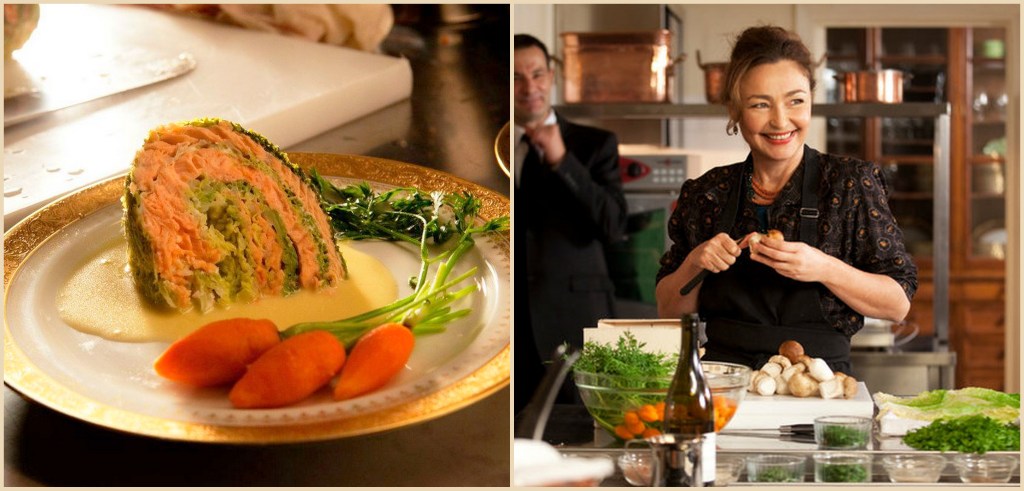
Film critic MacDonald said that there was not much going on in the movie ‘Haute Cuisine’, but I don’t think so. Haute Cuisine is an entertaining movie that highlights the intersection of food with gender and nationalism.
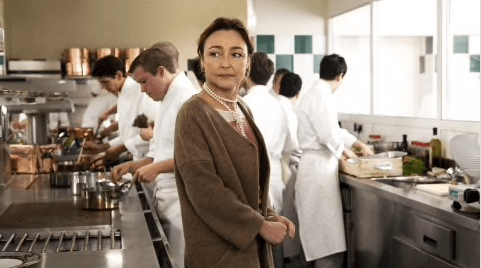
Indeed, the protagonist (Hortense Laborie) might not have the grand intentions to revolutionize French cuisine. It is a foodie film that conjures mouthwatering French regional dishes for the President and his guests to dine. Yet the kitchen dynamics were very gendered; Laborie was a female chef in a kitchen dominated by male. Scorned for securing a position as the President’s private chef, they dubbed her as ‘Madame Du Barry’, the mistress of Louis XV. Again, most of the reputed French chefs, such as Careme and Escoffier, were male. With ambitions of popularizing French cuisine, they rose from the bottom to attain prestige. But Laborie’s success wasn’t hindered by lack of ambition or hard work; it was structural inequality that propelled her to quit as President’s Chef.
Laborie was often ridiculed for her regional cooking. Haute cuisine is representative of french culinary identity, and many of her male colleagues supported such perception. However, the effect of showcasing regional food was to decentralize France’s culinary culture. It is definite that not everyone dine Parisian haute cuisine. Perhaps, the ridicule she received was due to the perception of haute cuisine as the highest form of culinary art. Hence, the emphasis on regional cooking seems to be a subtle attempt to challenge our perspective of France’s national identity and food.




 Annette's Taste of Europe